Health communication
When attention comes with responsibility.
A private case study. This project is not part of my public portfolio. I share it selectively because the work, the response it generated and the lessons I took from it deserve the full context.
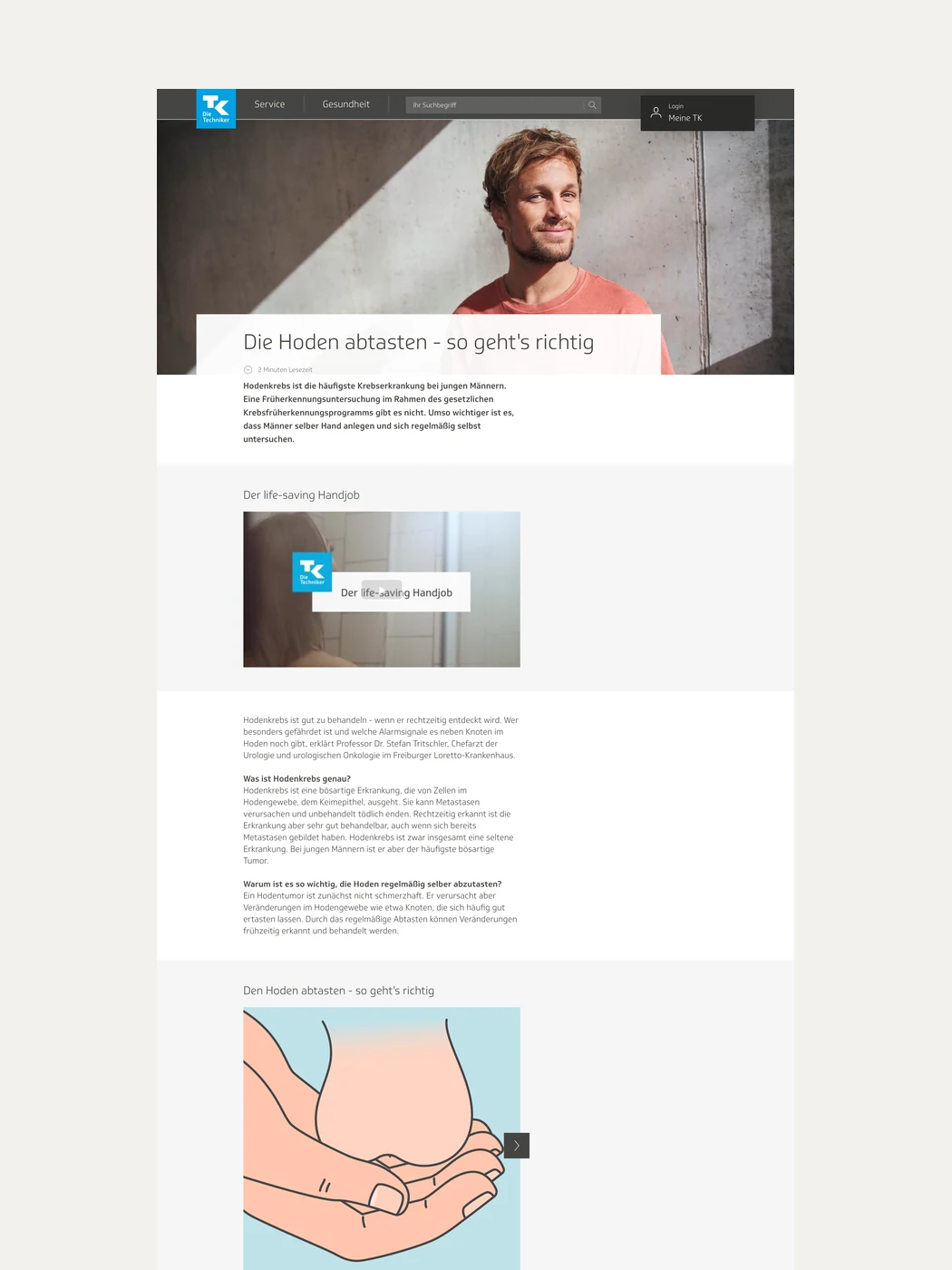
Testicular cancer disproportionately affects younger men, yet many are unlikely to seek out information about early detection on their own. The challenge was therefore not simply to explain self-examination, but to make the subject difficult to ignore.
For Techniker Krankenkasse, we developed a deliberately provocative campaign that borrowed the visual language and conventions of adult entertainment. The film began in the conventions of that genre, then shifted into a medically informed guide to testicular self-examination and the warning signs to look for.
Watch Film (opens a video player)
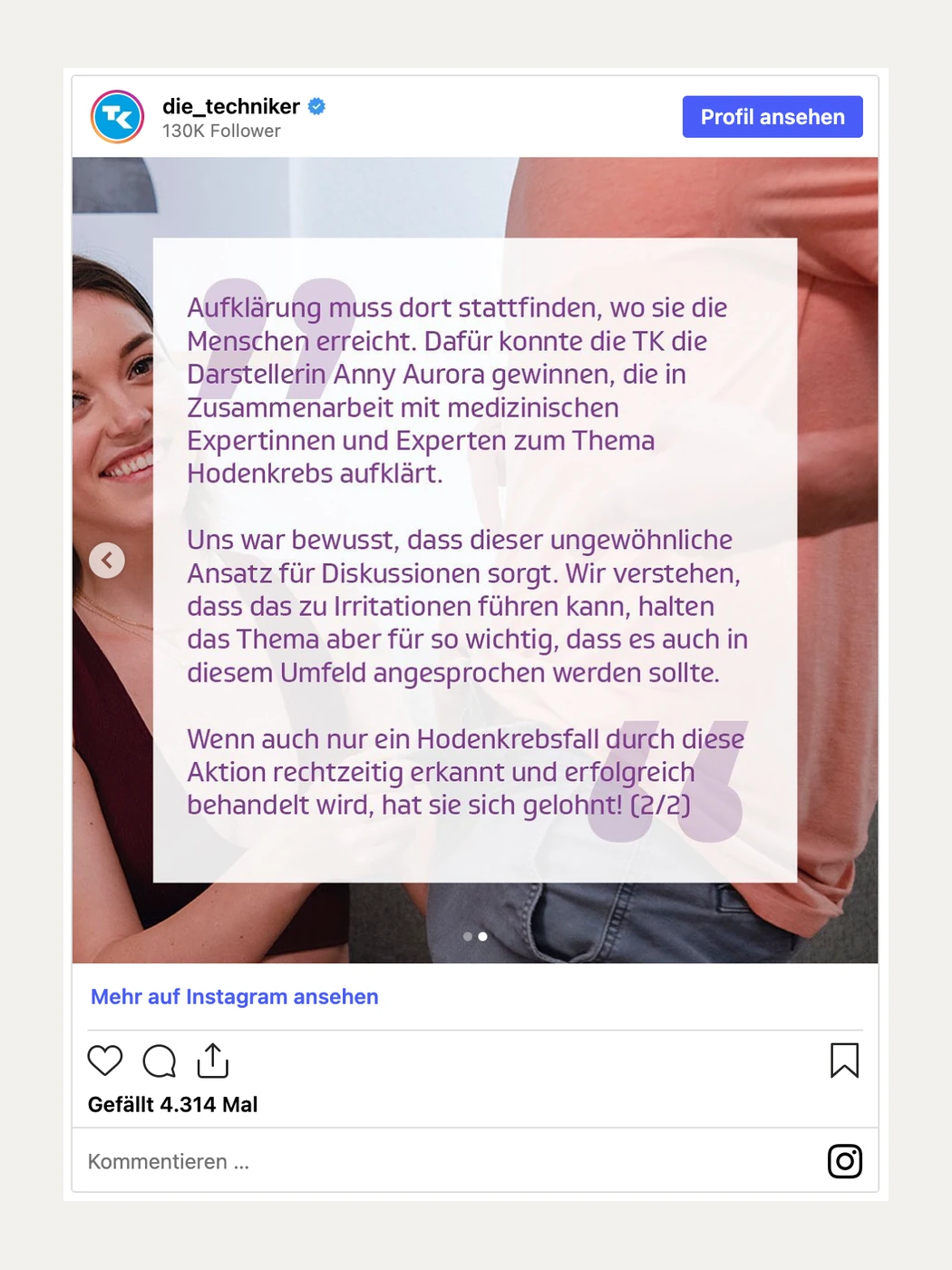
The approach generated immediate attention and substantial media coverage. It also triggered strong criticism. The central concern was that, in trying to reach young men through sexual provocation, the campaign reduced the female performer to a device for a male health message and distracted from the issue it was trying to address.
That response changed how I think about provocative communication. Attention is not a neutral metric. In health communication especially, the way an idea reaches one audience matters just as much as whether it reaches them.
Today, I would bring a broader range of perspectives into the process much earlier, before an idea reaches approval. The question would not only be whether the work is effective for its intended audience, but also what assumptions it reinforces and how it may be experienced by others.
The campaign remains an important project for me precisely because both things are true: the idea broke through, and the response exposed a blind spot in how we had evaluated it.